
Inlays & Onlays in Royse City, TX
A Conservative Approach to Restoring Damaged Teeth
When a tooth is too damaged for a filling but not damaged enough for a full crown, inlays and onlays offer an ideal solution. At Fate Family Dental, we provide custom-made inlays and onlays that restore the strength, function, and appearance of your natural tooth with precision and care.
Our skilled dental team—Dr. Andy Davong, Dr. Ambereen Ansari, Dr. Catherine Padilla, Dr. Senan Abd, Dr. Davood Quje, Dr. Neha Patel, and Dr. Scott Upchurch—uses advanced imaging and restorative techniques to ensure long-lasting, esthetic results tailored to each patient's needs.
What Are Inlays and Onlays?
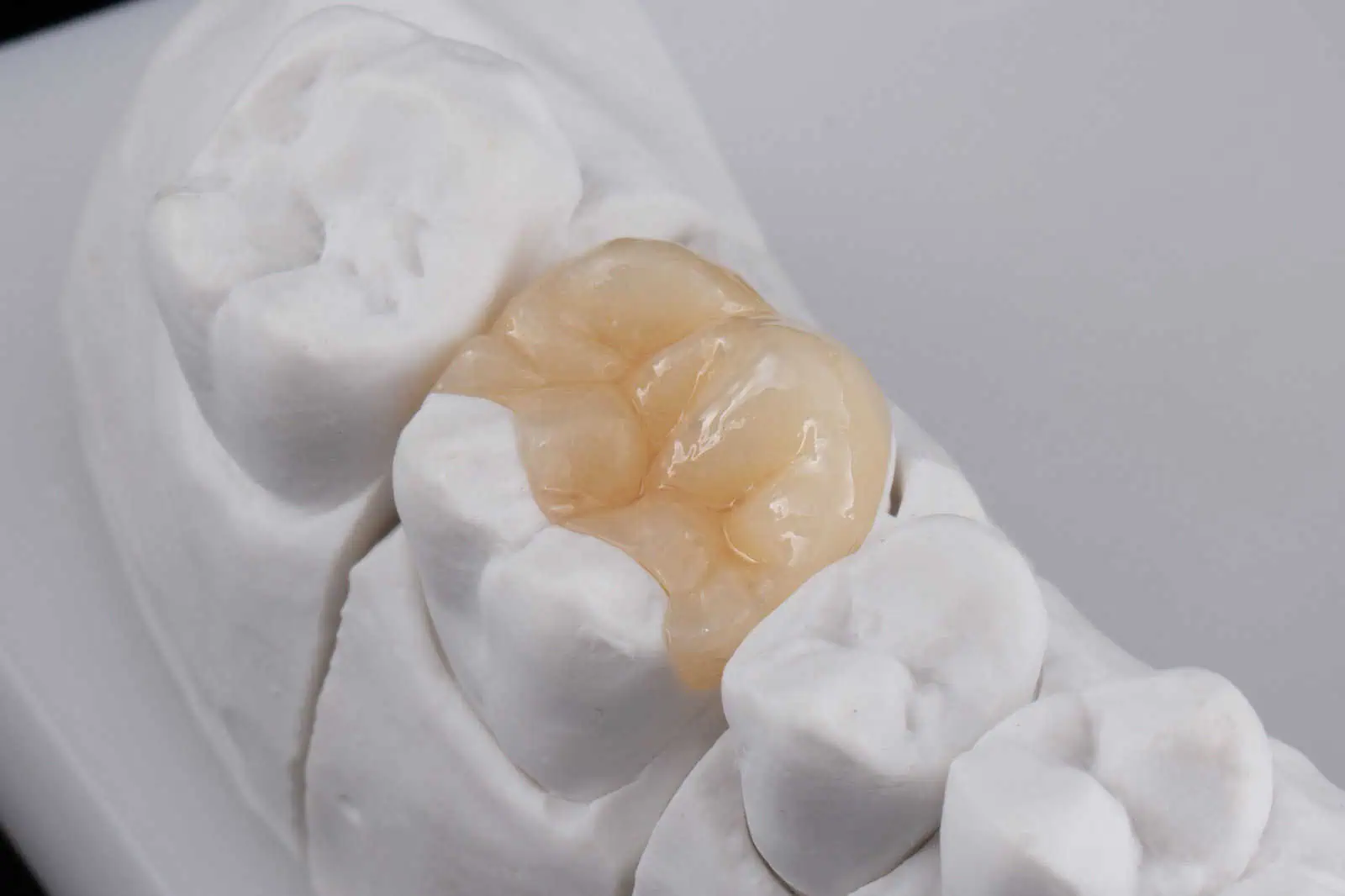
Inlays and onlays are custom restorations designed to repair teeth with moderate decay or damage—typically in the back molars. They're often referred to as "indirect fillings" because they are crafted outside the mouth and then bonded to the tooth.
- Inlays fit inside the grooves of the tooth, between the cusps.
- Onlays extend over one or more cusps to cover a larger portion of the tooth surface.
Both types of restorations are typically made from strong, tooth-colored materials such as porcelain or ceramic, offering durability and a seamless appearance.
When Are Inlays or Onlays Recommended?
These restorations are a great option when:
- A tooth has too much damage for a traditional dental filling
- A crown would require unnecessary removal of healthy tooth structure
- A large filling has failed or weakened the tooth
- You want a more precise, longer-lasting alternative to metal fillings
Benefits of Inlays and Onlays
- Preserve more of the natural tooth than crowns
- Strong and durable, with better resistance to wear and fracture
- Esthetically pleasing, blending in with surrounding enamel
- Tightly sealed, reducing the risk of future decay
- Custom fit, ensuring optimal function and comfort
Because they are fabricated outside the mouth using digital impressions, inlays and onlays provide a more accurate and tailored fit than standard fillings.
The Inlay & Onlay Procedure
Receiving an inlay or onlay typically involves two appointments:
- Tooth Preparation & Imaging – We remove the damaged or decayed area and take a digital impression using our iTero scanner. A temporary filling is placed to protect your tooth.
- Placement of Restoration – At your second visit, we bond the custom-made inlay or onlay into place, polish it, and check for proper fit and bite alignment.
The result is a highly durable and natural-looking restoration that strengthens your tooth for the long term.
Inlays vs. Fillings vs. Crowns
Not sure how these treatments compare? Here's a quick overview:
- Fillings – Best for small cavities or damage. Quick and cost-effective but less durable for larger repairs.
- Inlays & Onlays – Ideal for moderate damage; stronger and longer-lasting than fillings, while preserving more natural tooth structure than crowns.
- Crowns – Used when a tooth is significantly damaged or weakened, requiring full coverage for protection and strength.
Our team will help you decide which option is best based on your specific needs and level of damage.
Serving Royse City and Neighboring Communities
Fate Family Dental proudly serves patients in Royse City, Fate, Rockwall, Union Valley, and Josephine, TX. We provide conservative, high-quality restorative dentistry that helps you keep your natural teeth healthier for longer.
Frequently Asked Questions About Inlays & Onlays
Are inlays and onlays better than fillings?
In many cases, yes. Inlays and onlays are stronger, more durable, and provide a better seal than large traditional fillings—especially for molars that experience heavy biting forces.
How long do inlays and onlays last?
With proper care and regular dental cleanings and exams, they can last 10–20 years or longer.
Are inlays and onlays noticeable?
Not at all. Because we use tooth-colored materials, your inlay or onlay will blend seamlessly with your natural enamel.
Is the procedure painful?
The procedure is minimally invasive and performed under local anesthesia. You may experience slight sensitivity after placement, but this typically subsides quickly.
Can they be used on front teeth?
Inlays and onlays are most commonly used on premolars and molars. For front teeth, other treatments like dental bonding or veneers may be more appropriate.
